

If there’s one major Android smartphone player that’s given people a reason to complain about Samsung, it’s definitely Sony. The Japanese smartphone giant’s comeback into the big leagues began with the release of the Xperia Z back in 2013, and from there, they just didn’t stop. From the undeniable premium build quality of their flagships to the cool perks like water resistance, a multitude of accessories (NFC, anyone?), and of course, those wonderful Sony trademarks like the X-Reality engine for the display and the use of their world-renowned camera lenses.
Sony brings all of these and more into their latest flagship, the Xperia Z2. Released less than a year after the Xperia Z1, the Z2 brings slightly improved specs while retaining the good stuff coming from its predecessor and adding a little bit of extra on the side too. Check out the specs below:
Sony Xperia Z2 Specifications:
- Android 4.4.2 Kit Kat
- GSM 850/900/1800/1900; 3G 850/900/1900/2100; 4G 700/800/850/900/1700/1800/1900/2100/2600
- 2.3GHz Qualcomm Snapdragon 801 Chipset with Adreno 330 GPU
- 3GB LPDDR3 RAM ; 16GB ROM, expandable up to 128GB
- 5.2” IPS Display with Shatter Proof Glass Protection and X-Reality Engine for Mobile
- FHD (1920×1080) Resolution (424 PPI) Triluminos Display
- 20.7MP Sony Camera with a 1/2.3” Exmor RS Sensor, G Lens, BIONZ image processor, LED flash, A/F, BSI, f2.0 Aperture, and 4K video recording ; 2.2MP Front Camera
- 3200 mAh Li-Ion Battery (non-removable)
- GPS+GLONASS, USB-OTG 2.0, NFC, BT 4.0LE, Noise Cancellation Mic, MHL, FM Radio, Dual Band WiFi, Stereo front-facing speakers
- Accelerometer, Digital Compass, Gyroscope, Light Sensor, Barometer, Proximity Sensor
- IP58 Certified
After running through the paces with the Z2 over the last couple of weeks, it’s time to see what makes the Z2 truly flagship worthy.
I. Out of the Box
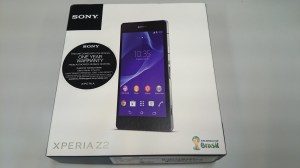 The Z2 comes in a traditional Sony Xperia box which, apart from the change in model name and device, has very little to no difference from the Z1’s packaging.
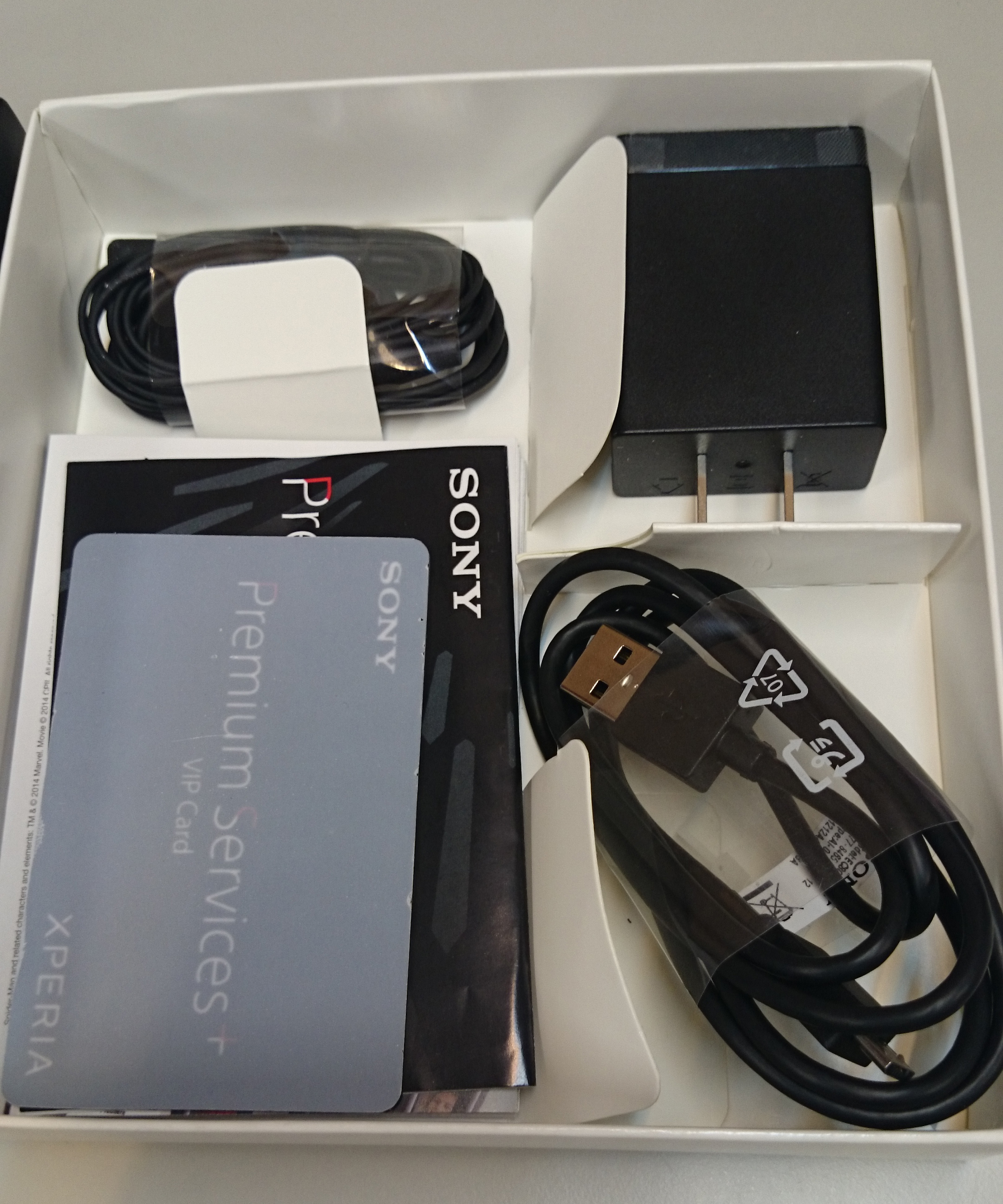
It also comes with the standard Sony accessories in the package such as the charger, USB cable, and noise-isolating headset. The back portion of the box features the main highlights of the Z2, and 3 in particular stand out, namely the Triluminos Display for Mobile, X-Reality Engine for Mobile, and BIONZ for Mobile. The 3 features sound great, but it would be better if it were explained, so, to break it down:
- Triluminos Display for Mobile – essentially brings out richer colors on the display. This was originally used to improve the colors on the TFT displays used on the Z Ultra and Z1 but with Sony’s switch to IPS on the Z1 Compact and Z2, this ensures much better viewing angles on the device.
- X-Reality Engine – the successor to the BRAVIA engine used on previous smartphones, the X-Reality engine, as the settings explains, is an “image quality enhancer for photos and videos”. It basically improves image quality across various mediums on your device when viewing it on screen.
- BIONZ for Mobile – Sony’s proprietary image processing engine. It helps to reduce noise on shots and improves colors and details.
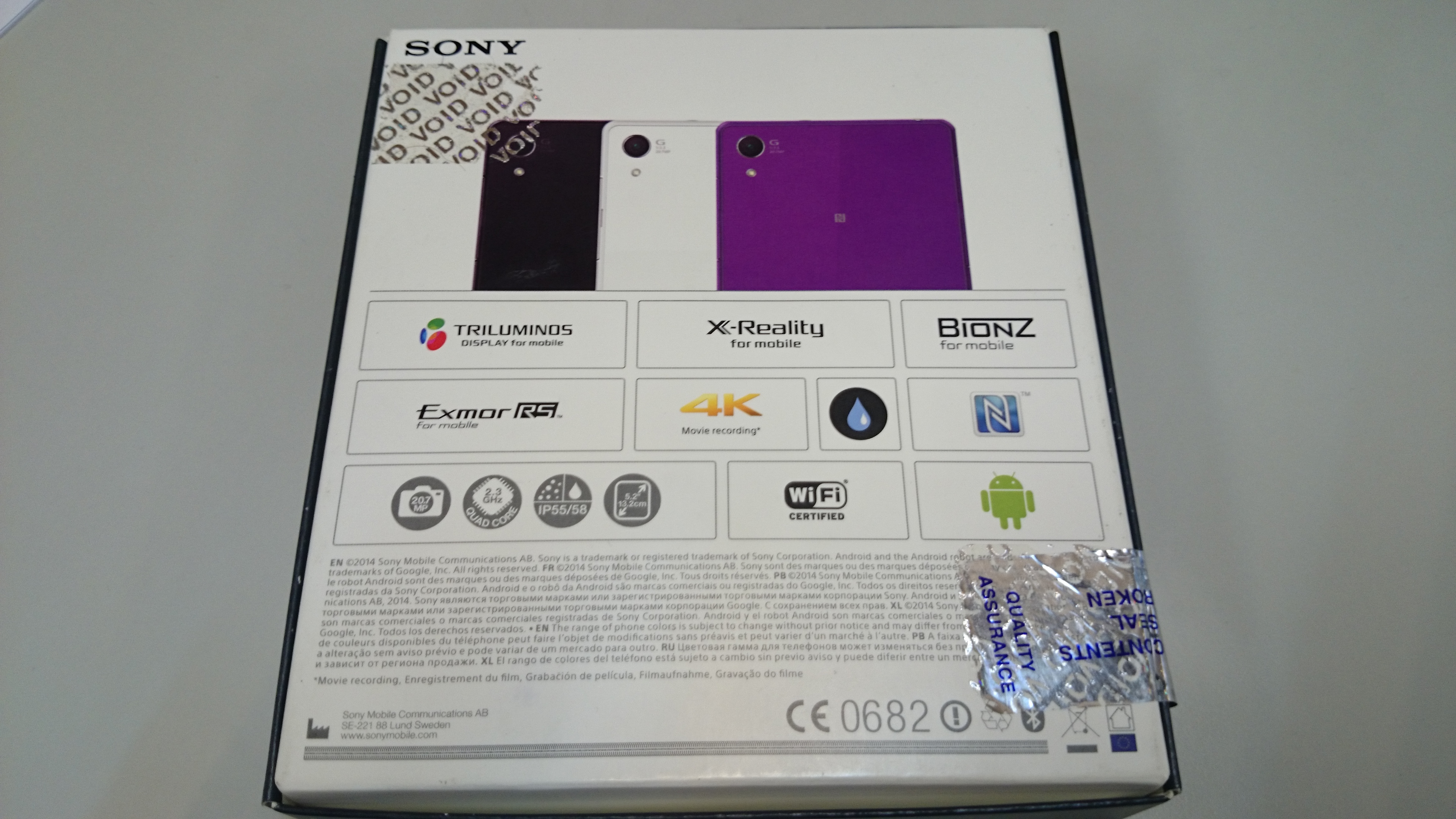
It also highlights other key selling points of the Z2 such as the ability to record 4K videos, its IP (Ingress Protection) 55/58 rating, and NFC connectivity.
The Z2 is quite an imposing smartphone. The top and bottom bezels of the device become very apparent upon the first boot of the device, but it should be remembered that the top portion of the device plays host to a speaker, the noise-cancelling microphone, and the 20.7MP camera, while the bottom plays host to the other speaker as well as the primary microphone.

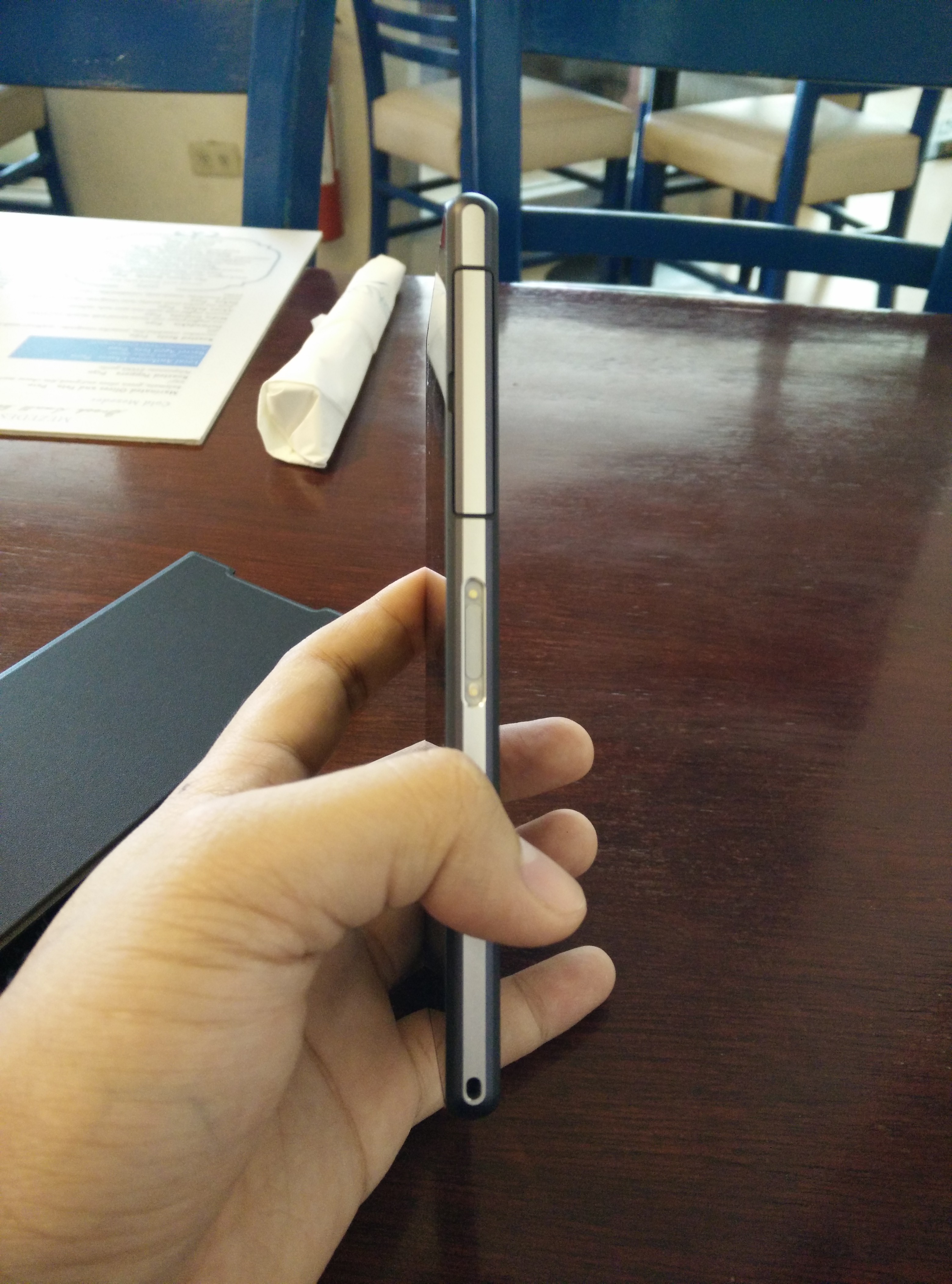
It’s covered in glass on both the front and back, and unlike previous releases, the Z2 no longer comes with a screen protector in the front. It also features a one-piece aluminium frame, helping to keep the device’s build look much sturdier and, of course, more premium. At 8.2mm, it’s not the slimmest among the bunch, but it definitely helps keep everything to a minimum. It’s also not the smartphone for people with relatively small hands. That title belongs to its sibling, the Z1 Compact.

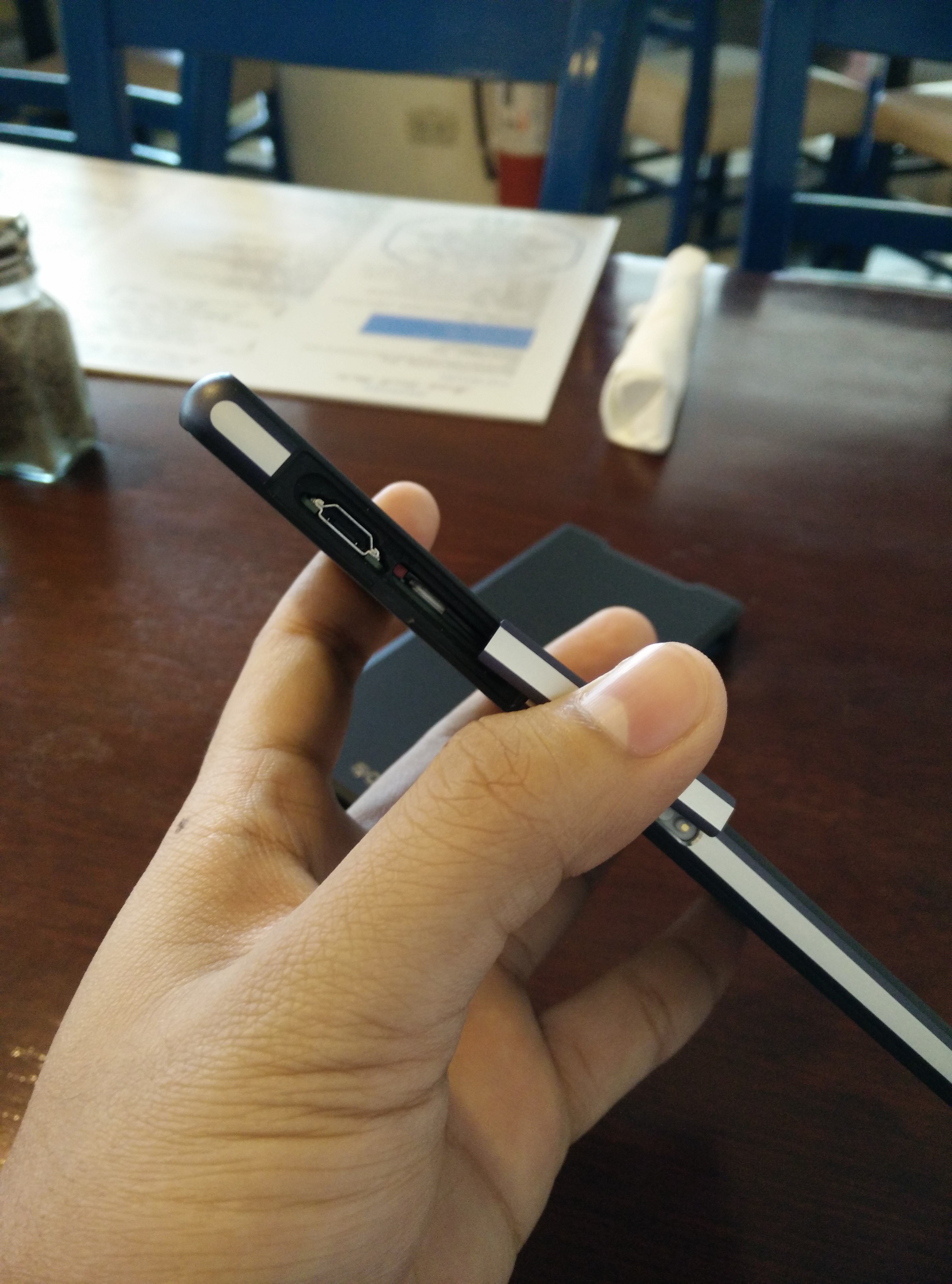
The left side of the phone features a flap that covers slot for the micro SIM card and the charging port, while below that is the magnetic charging dock. The right side has the SD card slot, the power button, the volume keys, and the dedicated camera button which also launches the camera application when held for 2-3 seconds.

It runs on Android Kit Kat with the Xperia launcher as default. An interesting addition is the option to change from the Xperia launcher to the “Simple Launcher” which brings out only basic applications plus 3 Speed Dial contacts to the screen. Opening the app drawer will result in a drop down list instead of the usual neatly set icons.
![Screenshot_2014-07-30-15-29-41[1]](https://thegdgtguy.com/wp-content/uploads/2014/08/screenshot_2014-07-30-15-29-411.png)
![Screenshot_2014-07-30-15-29-52[2]](https://thegdgtguy.com/wp-content/uploads/2014/08/screenshot_2014-07-30-15-29-522.png)
Overall, the device’s external features definitely scream premium. It’s currently the only flagship device in its range to sport premium materials like glass and aluminium and be IP58 certified at the same time. Although its size is not for everyone, it should still be commended for being able to pack all its features in a considerably slim frame.
II. The Sony Ecosystem
The Xperia UI is nothing too flashy, and compared to the competition, doesn’t bring too much to the table in terms of software enhancements. While Samsung and LG have been busy adding features to their UI (Knock On Knock Off, Health Apps, etc.), Sony’s UI has only focused on keeping things as simple as possible.
![Screenshot_2014-07-30-15-30-44[1]](https://thegdgtguy.com/wp-content/uploads/2014/08/screenshot_2014-07-30-15-30-441.png)
![Screenshot_2014-08-04-16-45-54[1]](https://thegdgtguy.com/wp-content/uploads/2014/08/screenshot_2014-08-04-16-45-541.png)
One major advantage that Sony does have against its rivals is its wide-range of connected content and media at its disposal. On the music side, it comes with the Walkman application as its default music player, has a movie creator application for quick movie editing (available with Build Version 17.1.2.A.0.314), and even comes pre-installed with TrackID, which serves as Sony’s answer to Sound Hound. Lest we forget that Sony as a whole as a film, music, and even gaming company, so any co-branding activities that Sony would want to do, they can do in an instant.
On the accessories side, Sony has practically made all sorts of ways to connect their devices to each other. Wireless headsets can be connected via NFC, smartphones can connect to laptops via NFC as well, and your Sony device can sync with a Sony Smart TV with ease. It’s also MHL-capable so that you can plug it into an HDMI-ready TV and play games or watch videos.
III. Performance and Usage
The Z2 runs on an updated Snapdragon 801 chipset running at a slightly faster clockspeed of 2.3GHz. It’s also updated its GPU clockspeed to 550MHz, giving the Z2 better speeds with both the CPU and GPU. In terms of real life performance, and coming from personal experience from using both, there’s not a lot in terms of actual usage, but the benchmark scores speak for themselves when it comes to the improvements from the Z1.
Antutu: 36140
Quadrant: 21084
Nenamark2: 60.0 FPS
Vellamo Multicore Test: 1715
![Screenshot_2014-07-10-11-50-38[1]](https://thegdgtguy.com/wp-content/uploads/2014/08/screenshot_2014-07-10-11-50-381.png)
![Screenshot_2014-07-31-15-03-09[2]](https://thegdgtguy.com/wp-content/uploads/2014/08/screenshot_2014-07-31-15-03-092.png)
![Screenshot_2014-07-31-15-40-57[1]](https://thegdgtguy.com/wp-content/uploads/2014/08/screenshot_2014-07-31-15-40-571.png)
![Screenshot_2014-07-31-15-30-59[2]](https://thegdgtguy.com/wp-content/uploads/2014/08/screenshot_2014-07-31-15-30-592.png)
The battery life of the Z2 is definitely commendable. Running it through heavy use such as downloading via LTE, playing videos, connecting the music to the car via Bluetooth, browsing, and calls and texts resulted in more than 30% remaining by the end of the day. Sony also has various Power Management solutions such as its STAMINA Mode, Low Battery mode, and setting up your Wi-Fi to be location based. Another helpful tip to extend the battery life is to download the Qualcomm Battery Guru (not used for this review) that not only helps in conserving battery consumption, but studies how you use your device in order to adjust how your battery is consumed.
![Screenshot_2014-07-28-12-41-18[2]](https://thegdgtguy.com/wp-content/uploads/2014/08/screenshot_2014-07-28-12-41-081.png)
IV. Camera
One of the biggest bragging rights of Sony is in their camera department. Apart from being one of the world’s largest smartphone camera suppliers (e.g. LG, Xiaomi, Apple, etc.), they’ve been using the same camera set-up since the Xperia Z1. While the inclusion of such a camera would normally result in a bulge on the device, Sony’s omnibalance design ensures that the entire device is flat and keeps the camera in place. It’s paired with a single LED flash, and with its f2.0 aperture and BSI sensor in tow, low-light shots should be a breeze. It also has a wide array of settings for you to choose from.
![Screenshot_2014-08-01-10-05-52[1]](https://thegdgtguy.com/wp-content/uploads/2014/08/screenshot_2014-08-01-10-05-521.png)
![Screenshot_2014-08-01-10-05-59[1]](https://thegdgtguy.com/wp-content/uploads/2014/08/screenshot_2014-08-01-10-05-591.png?w=300&h=168)
Check out the photo samples below and see just how well it performs in both low-light and fairly-lighted conditions:



Its other big bragging right is the ability to shoot in 4K. You can check out a sample of the video quality below. Do take not that at around 57 seconds, the file size is at around 377MB, whereas another video taken with the Z2 at 2 and a half minutes was at 277MB:
V. Conclusion
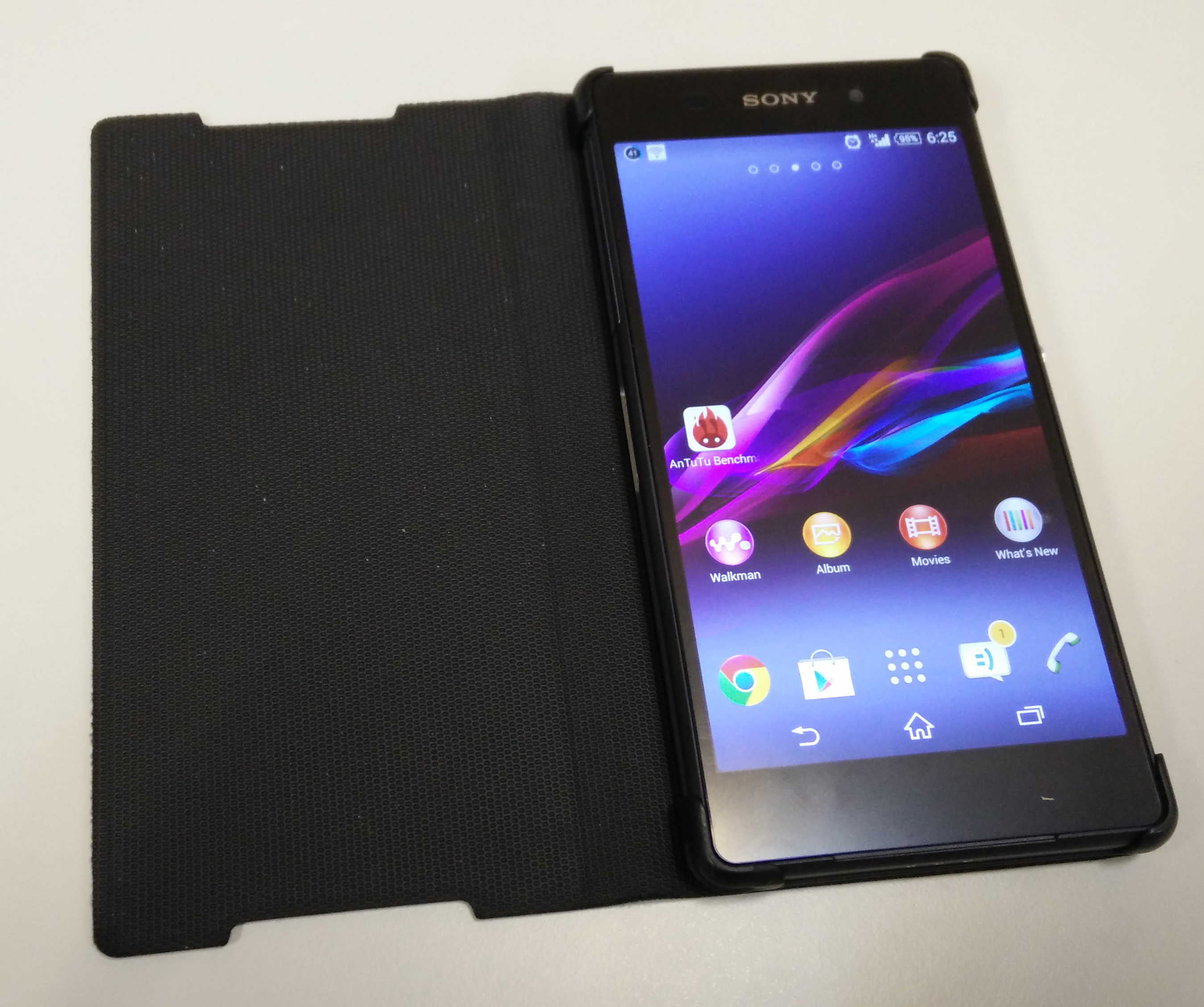
Without a doubt, the Z2 deserves its status as a flagship to beat. It brings to the table not only a friendly user experience, but goes beyond that by offering much more in the line of value-added services such as additional accessories, the VIP service, and of course, being able to take it to the beach or the pool while taking pictures under water.
While the price is admittedly a bit out there, it’s in the range of most major flagships. And one major concern for consumers, especially the ones willing to shell out the big bucks for the device is Sony’s recent announcement that the life cycle of a flagship will only last 6 months at the most. Even at the time of writing, the Z3 is already being rumored to be announced in September, with a December release not too far-fetched. If you’re perfectly fine with everything that the Z2 is, then you shouldn’t worry too much. However, if you are a stickler for the latest devices, then choosing a Sony flagship might not necessarily be your cup of tea, since the frequent flagship changes may not be suited for your budget.
Nevertheless, it cannot be denied that it’s an attractive offering, and with the ecosystem it’s made for itself, general consumers and Sony fans alike should have no trouble loving the Z2.
 thegdgtguy.com
Touche. Great arguments. Keep up the good spirit.
nice review po.. thumbs up…. Now I have to choose from the HTC ONE M8 vs SONY XPERIA Z2
👍